Finally! Meaningful, Memorable History!

Tree Trekkers: Adventures in History for Homeschooling Families
This engaging guide is the history curriculum you've longed for without ever realizing it was possible. Tree Trekkers: Adventures in History Through Genealogy for Homeschooling Families is a cross-curricular, affordable, highly adaptable program created for learners of multiple ages and stages. It brings history vividly to life by weaving it together with your own family story through genealogy, transforming the study of the past into something deeply personal and meaningful. Truly one-of-a-kind, this curriculum is designed for your unique family and offers joy, discovery, and connection from start to finish.
Tree Trekkers weaves together world history, United States history, geography, language arts, primary source research, study skills, cultures, crafts, and much more across nearly 300 pages of rich, project-based learning. It also serves as a launching point for further exploration in science, mathematics, practical life skills, and character formation. As families journey back through time together, they will encounter immigration stories, ancestral homelands, global cuisine, arts and handicrafts, scientific innovations, wars, U.S. Presidents, architecture, occupations, World’s Fair Exhibitions, transportation, and countless other topics. Along the way, students and parents alike will experience deeper reflection, greater empathy for others, a spirit of gratitude, an encouraging outlook, resilience, patience, and renewed hope for the future.
This illustrated guide is designed to span 32 weeks, yet it is intentionally flexible and may be condensed or extended to suit your family’s preferences, schedule, and the ages and needs of your children. Designed primarily for grades K–8, this curriculum can also be effectively used with high school students when supplemented with additional parent-led discussion and deeper extensions. You will find that the avenues for learning are almost limitless with this subject matter.
Tree Trekkers offers enough structure to give parents confidence and clarity, while remaining fully customizable to your family’s interests, learning styles, and desired pace. The parent, as teacher, remains the guiding force in every respect, while the program’s supportive framework is thoughtfully designed to provide structure, clarity, confidence, and JOY along the way.
A well-designed homeschool history curriculum supports the whole child by integrating cognitive, language, social-emotional, physical, moral, and creative development, helping children understand the past while growing in empathy, character, and critical thinking. Utilizing a team of nine relatable, skill-focused fellow "explorer" characters across the curriculum helps students recognize, practice, and strengthen specific skills while making the learning process more friendly, engaging, and approachable.
Tree Trekkers can also be used effectively as an enrichment option for groups or co-ops. In this model, each family works through the curriculum independently at home and then comes together to share discoveries, collaborate on crafts, and encourage one another. These gatherings naturally foster valuable life skills such as public speaking, teamwork, collaboration, and problem-solving, making this approach especially beneficial for teens.
If your homeschool leans toward a Montessori-inspired philosophy, you will find strong alignment here. Tree Trekkers embraces many of the same principles, including flexible pacing, timelines, independent exploration, and a deep sense of wonder and awe. The content is rooted in our shared human experience and invites immersion in “Big Picture History,” encouraging meaningful, whole-person learning. Emphasis on research, investigation, and process-oriented discovery helps lay a strong foundation for future academic and life skills. In a way few history programs can, Tree Trekkers reaches the heart as well as the mind.
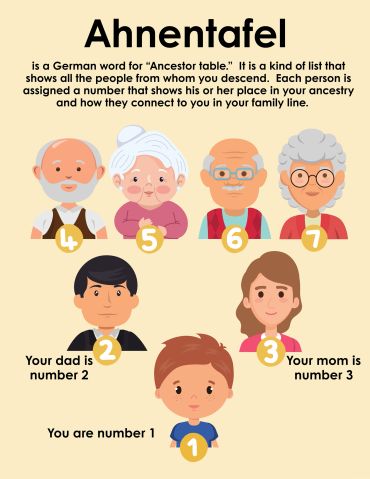
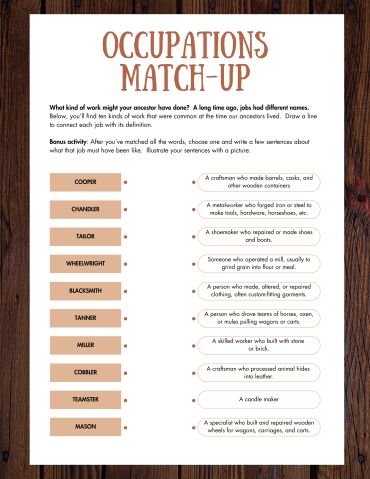
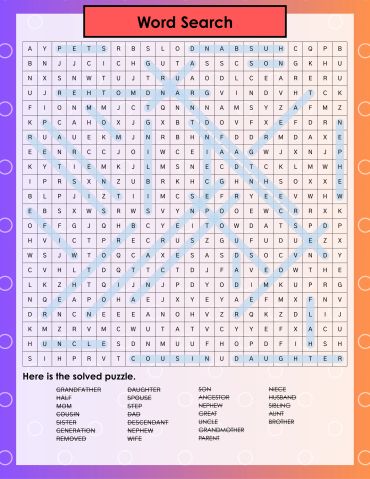
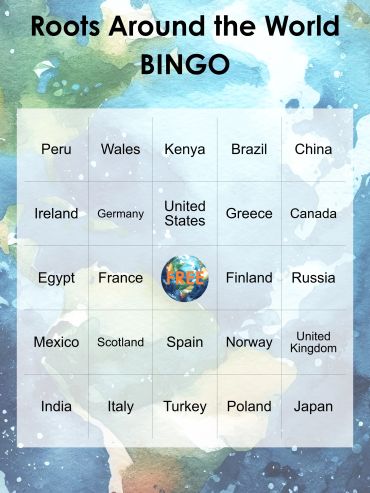
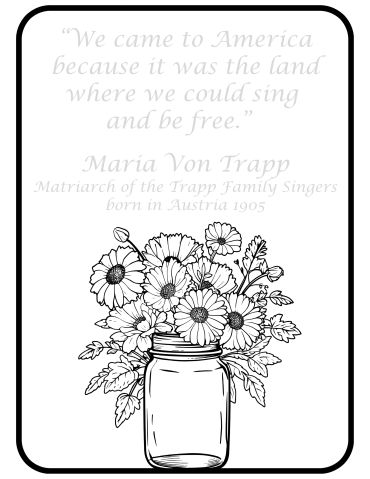
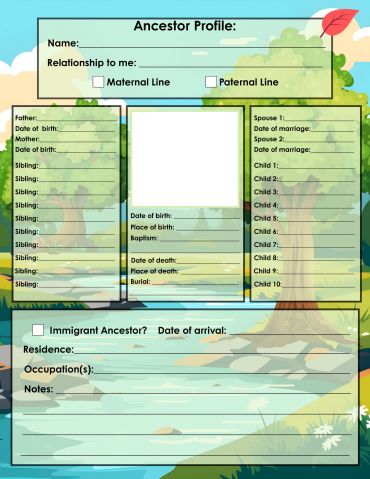
Included with the guide is a generous 123-page appendix filled with bonus resources. These materials include puzzles, games, reflections, dictation, penmanship practice, coloring pages, hands-on activities, and reusable master templates for spelling and vocabulary work, family history scrapbook pages, Ancestor Profiles, Family Favorites Cookbook pages, grandparent interviews, and much more.
First created for my own family, this curriculum is the result of many years of research, development, and heartfelt effort, inspired by my lifelong love of genealogy and history. The original program I created is called Family of God: A Study of History through Genealogy for Catholic Homeschooling Families. Tree Trekkers is based on that guide, providing a non-faith based option for a meaningful, memorable history curriculum for the larger homeschool community. For both products, I remain personally available to answer questions or provide guidance as needed, and my direct contact information is included in the materials so you will never feel alone on this wonderful journey. I wish you and your family the very best!
Adventures are always more fun when they are shared!
A Whole-Child Approach to Learning History
When learning history engages all areas of child development - cognitive, language, social-emotional, physical, moral, and creative - children do more than just learn facts. They connect with people and events of the past in ways that strengthen reasoning, communication, moral understanding, creativity, and emotional insight. They engage more deeply and form meaningful, lasting connections with the past.
With this strong foundation established, students gain insight and wisdom that shape the way they understand the present and then prepare them to make thoughtful, well-grounded choices in the future. Isn't this exactly what we, as parents, hope for as we homeschool our children?
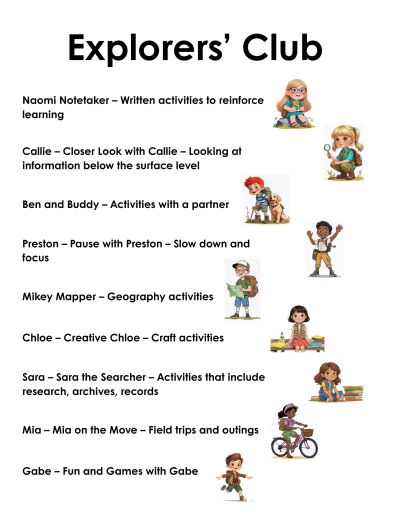
This study of genealogy offers countless opportunities to incorporate all aspects of age-appropriate child development into the program. To highlight these opportunities, Tree Trekkers engages familiar, skill-focused characters across the curriculum to help students recognize, practice, and strengthen specific learning skills while making the process more fun and interesting.
Introducing the friends who will bring learning to life in exciting ways...
Naomi Notetaker - Written Activities to Reinforce Learning
Writing and notetaking deepens understanding, strengthens memory and retention, reveals gaps in knowledge, improves organization, encourages active learning, builds communication skills, supports metacognition (thinking about thinking), supports multi-age activities, and creates a record of learning.
Closer Look with Callie - Looking Below the Surface
Close analysis creates depth of understanding and discernment, stronger critical thinking, improved comprehension, better problem-solving, and long-term retention of information.
Ben and Buddy - Activities with a Partner
Collaborative learning enhances understanding, encourages active learning, develops social skills, builds confidence, deepens insight, supports motivation, and makes challenging tasks more enjoyable and engaging.
Pause with Preston - Slow Down and Focus
Pausing to focus before going forward reinforces learning by helping children process information carefully and approach tasks mindfully. Benefits include improved concentration, reduction of errors, enhanced comprehension, improved self-regulation, and thoughtful decision making.
Sarah the Searcher - Research, Archives, Records
Activities that aid children in investigating, analyzing, and connecting information from reliable sources help them develop lifelong research skills, strengthen critical thinking, enhance comprehension, understand context, build attention to detail, foster independent learning, promote curiosity, encourage source evaluation, improve clarity in writing and speaking, connect past and present, understand continuity and change over time, and practice perseverance.
Mikey Mapper - Geography Activities
Learning about maps complements the study of history by helping children see connections between places, events, and cultures. Key benefits include building spatial awareness, strengthening comprehension, understanding geographic context, enhancing memory, encouraging critical thinking, and fostering understanding of diverse cultures.
Creative Chloe - Craft Activities
Creative and artistic activities complement learning materials by helping children express their personal understanding, make cross-curricular connections, engage multiple senses, build flexible thinking, deepen comprehension, support memory retention, build problem solving skills, develop confidence, and communicate ideas, feelings, and interpretations in personal and meaningful ways.
Mia on the Move - Field Trips and Outings
Connecting classroom concepts with real-world experiences enhances engagement, encourages observation and inquiry, fosters curiosity and exploration, and supports retention through lasting visual memories and associations.
Fun and Games with Gabe
Integrating fun activities, games, and happy experiences related to history helps children engage joyfully while connecting personally with historical events and concepts. This supports healthy child development by strengthening executive function skills, increasing motivation through participation, encouraging active learning, supporting collaborative experiences, reducing stress, building confidence, and making history relatable as a shared human experience.
Generous appendix filled with resources at-the-ready!